
The Physics of Ectothermic Homeostasis and Smart Enclosure Innovations for Optimal Reptile Care
Reptiles rely heavily on their environment to regulate body temperature and maintain essential physiological processes. Unlike mammals, reptiles are ectothermic, meaning they depend on external heat sources and ultraviolet radiation to sustain metabolic functions. Understanding the physical principles behind ectothermic homeostasis and integrating smart enclosure technologies can significantly improve reptile health and welfare. This article explores the critical role of UV-B radiation in vitamin D3 synthesis and calcium metabolism, alongside the application of automated environmental controls to create precise microclimates within reptile habitats.
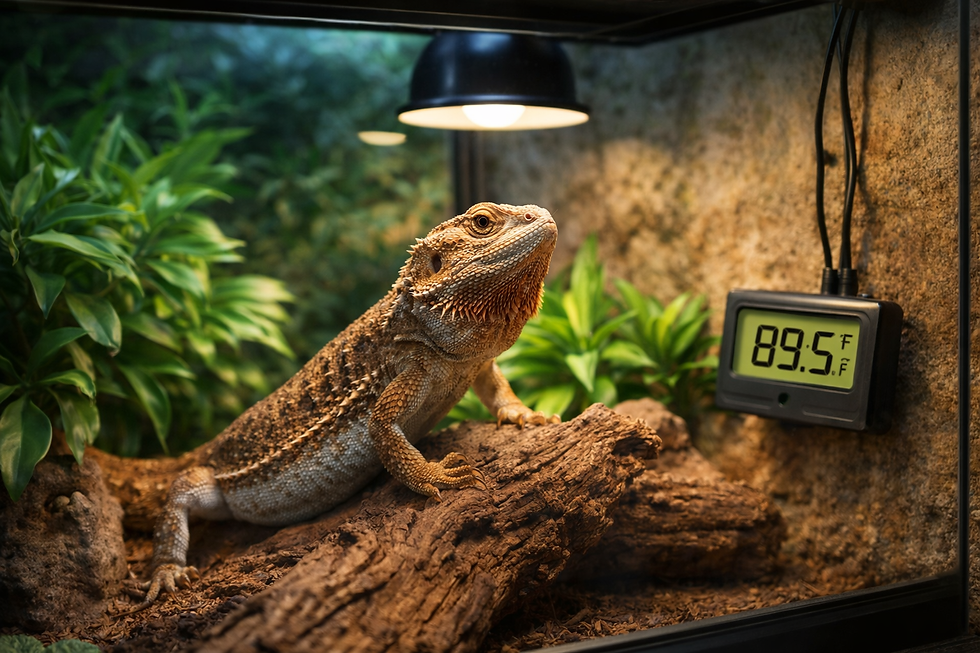
Ectothermic Physiology and UV-B Spectrum Dynamics
Reptiles depend on external heat sources to regulate their body temperature, which directly influences enzymatic activity and metabolic rates. Their ectothermic nature means they cannot internally generate sufficient heat to maintain homeostasis. Instead, they use behavioral thermoregulation, such as basking in sunlight or under artificial heat lamps, to achieve optimal body temperatures.
The Role of UV-B Radiation in Vitamin D3 Synthesis
UV-B radiation, specifically wavelengths between 280 and 315 nanometers, is essential for the cutaneous synthesis of vitamin D3 in reptiles. When UV-B photons penetrate the skin, they convert 7-dehydrocholesterol into previtamin D3, which then thermally isomerizes into vitamin D3. This vitamin is crucial for calcium absorption in the intestines and subsequent bone mineralization.
Without adequate UV-B exposure, reptiles develop metabolic bone disease (MBD), characterized by weakened bones, deformities, and impaired mobility. Studies show that UV-B intensity and duration must be carefully calibrated to match species-specific requirements, as excessive UV-B can cause skin damage, while insufficient exposure leads to deficiency.
Calcium Metabolic Absorption and Homeostasis
Vitamin D3 facilitates calcium uptake by promoting the synthesis of calcium-binding proteins in the intestinal lining. Calcium is vital for neuromuscular function, blood clotting, and skeletal integrity. The balance of calcium absorption, storage, and excretion is tightly regulated through endocrine feedback involving parathyroid hormone and calcitonin.
In natural habitats, reptiles achieve this balance by alternating between sunlit basking areas and shaded refuges. The physics of heat transfer—conduction, convection, and radiation—governs how reptiles absorb and dissipate heat, influencing their metabolic efficiency.
Automation in Herpetology: Smart Environmental Controls
Advances in sensor technology and automation have transformed reptile husbandry. Smart enclosures equipped with environmental sensors and programmable controls can replicate natural microclimates with high precision. These systems manage temperature gradients, humidity levels, and UV-B exposure to support reptile health.
Programming Microclimates: Basking Spots and Cooling Zones
Smart enclosures use multiple heating elements, such as ceramic heat emitters and UV-B lamps, combined with cooling mechanisms like ventilation fans and water misters. Sensors continuously monitor temperature and humidity at various points, enabling dynamic adjustments.
For example, a basking spot may be maintained at 35–40°C with UV-B irradiance calibrated to species-specific needs, while adjacent cooling zones remain at 22–25°C to allow thermoregulation. Automated timers and feedback loops ensure consistent cycles that mimic diurnal patterns.
Benefits of Automation for Reptile Welfare
Precision: Maintains stable environmental parameters within narrow tolerances.
Consistency: Reduces human error and variability in husbandry practices.
Data Logging: Tracks environmental conditions over time for health monitoring.
Customization: Adapts to different species’ ecological niches and life stages.
Case studies demonstrate that reptiles housed in smart enclosures exhibit improved growth rates, reduced stress behaviors, and lower incidence of metabolic disorders compared to those in manually controlled setups.
Practical Considerations for Implementing Smart Enclosures
When designing or selecting a smart enclosure system, consider the following:
Sensor Placement: Position temperature and UV-B sensors at multiple heights and locations to capture microclimate variability.
UV-B Lamp Quality: Use lamps with stable output and appropriate spectrum; replace bulbs according to manufacturer guidelines.
Ventilation: Ensure adequate airflow to prevent heat buildup and maintain air quality.
Humidity Control: Integrate misting or fogging systems for species requiring higher moisture levels.
User Interface: Choose systems with intuitive controls and alerts for parameter deviations.
Regular calibration and maintenance are essential to sustain system accuracy and reliability.
Smart enclosure technology represents a significant advancement in reptile care by applying physical principles of heat and light to create optimal living conditions. Understanding the interplay between UV-B radiation and calcium metabolism, combined with precise environmental control, supports healthier reptiles and reduces common husbandry challenges.
Comments